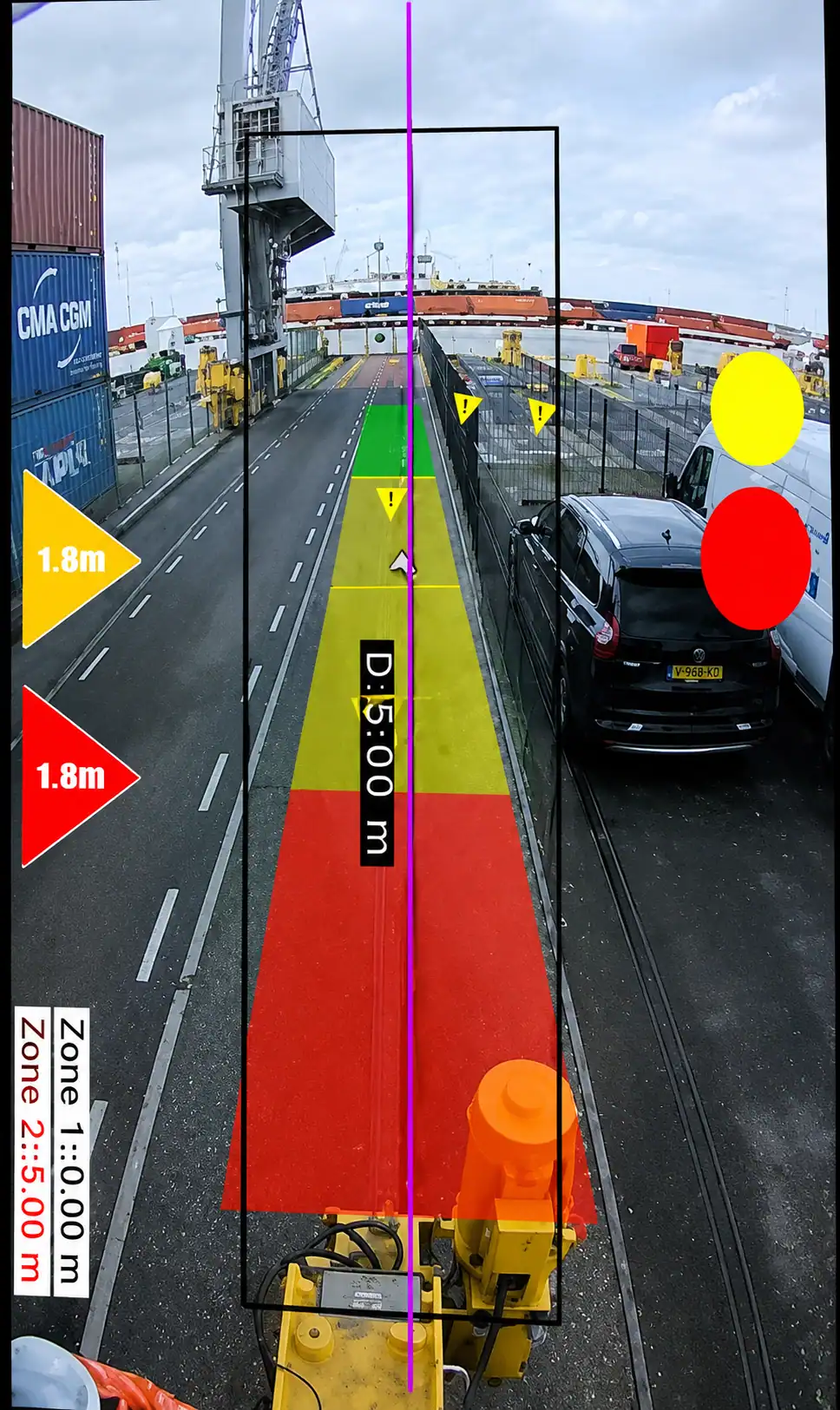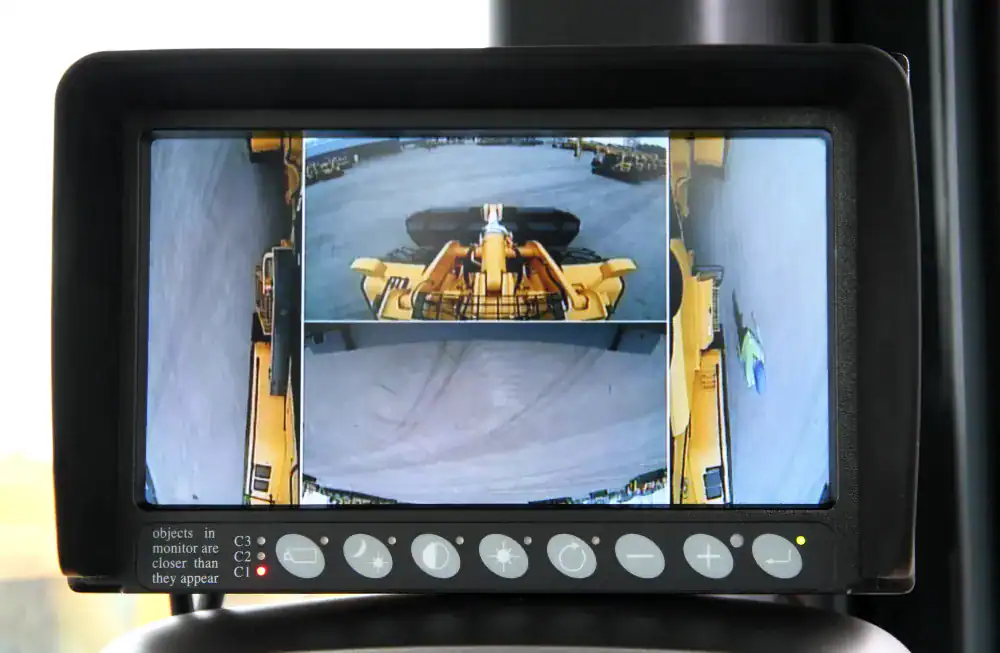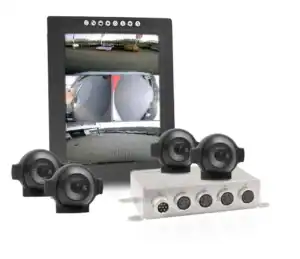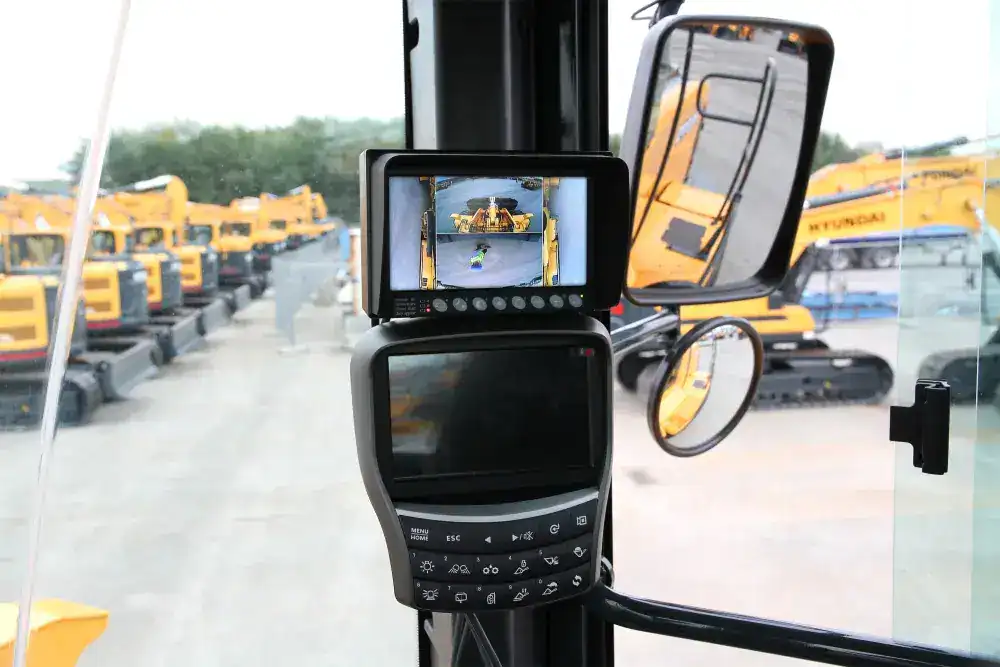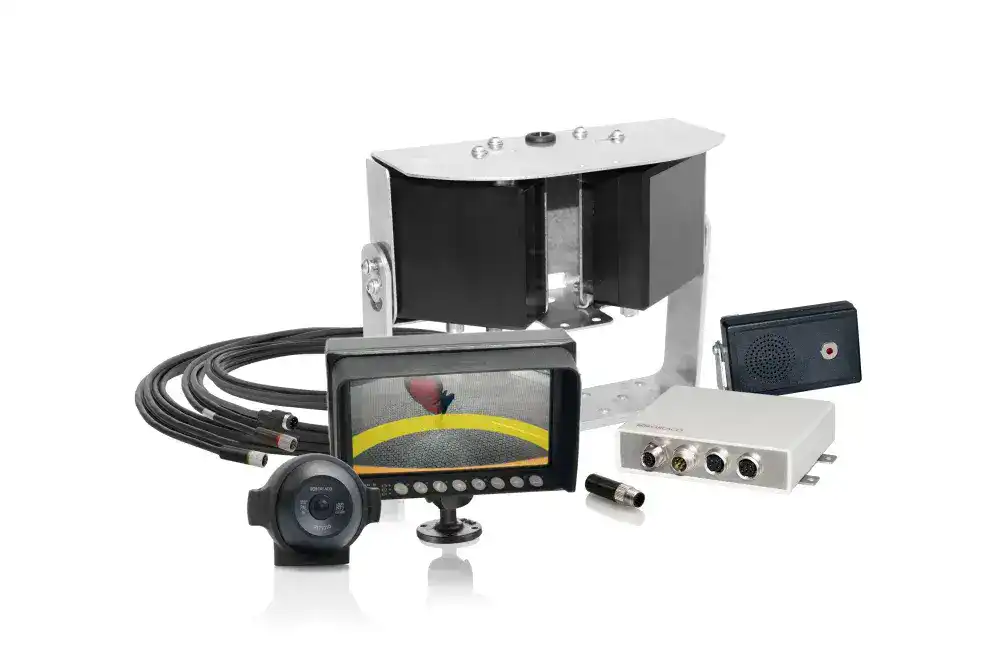
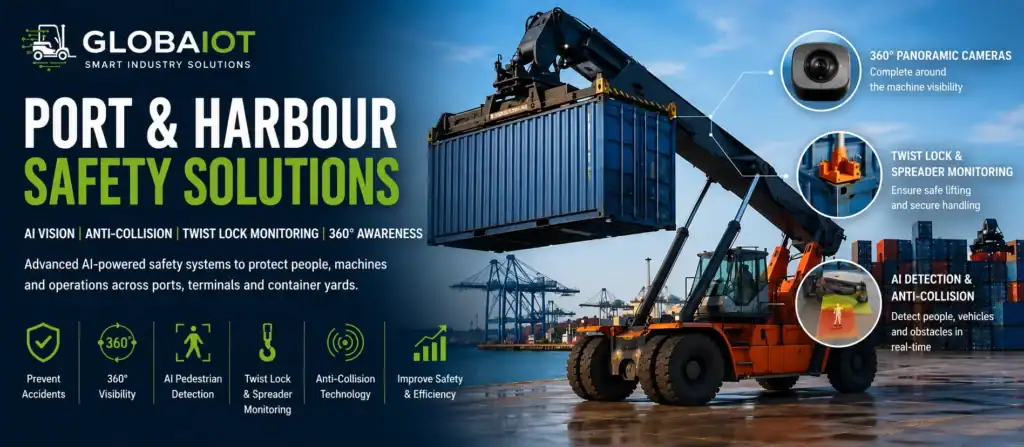
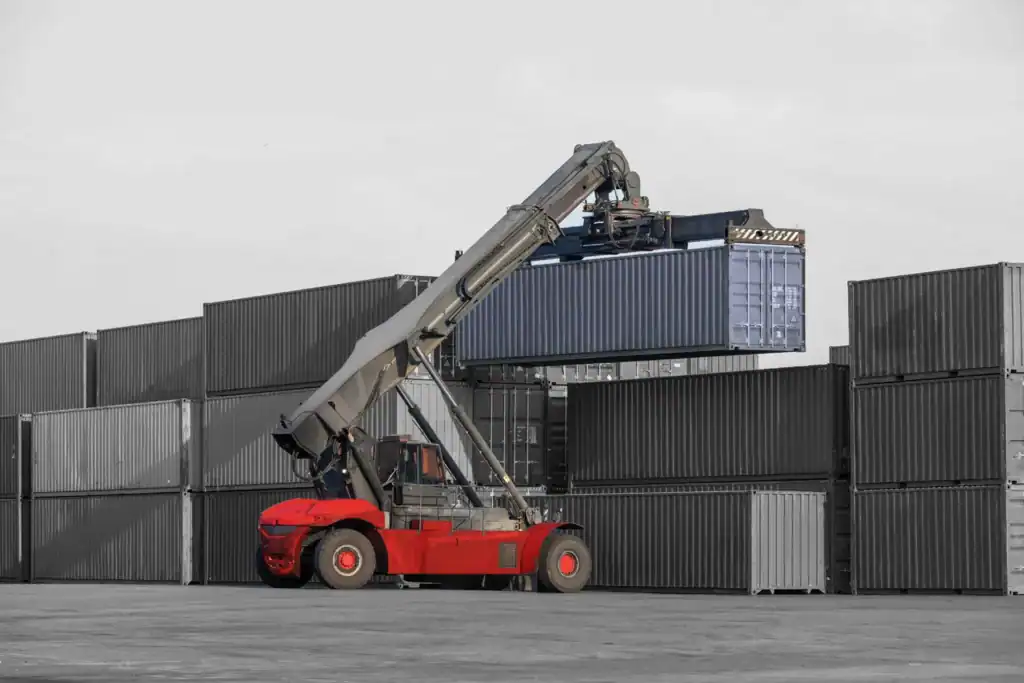
GLOBAIOT delivers advanced AI-powered anti-collision and vision systems engineered specifically for high-risk port and heavy equipment operations including Reach Stackers, Empty Container Handlers (ECH), RTGC cranes, straddle carriers, terminal tractors, and container handling machinery. By combining AI computer vision, millimeter-wave radar technology, intelligent object recognition, and automatic slowdown control, our solutions eliminate blind spots, enhance operator awareness, and significantly reduce collision risks in dynamic terminal environments.
Our intelligent safety platform continuously detects pedestrians, vehicles, containers, and obstacles in real time, creating proactive safety zones around equipment. Using advanced AI analytics and radar fusion, GLOBAIOT automatically generates visual and audible alerts while triggering auto-slowdown or machine safety interlocks whenever a critical risk is identified. This enables operators to react faster while minimizing human error, asset damage, and operational downtime.
Designed for demanding port and industrial environments, GLOBAIOT systems operate reliably under extreme weather, dust, vibration, and heavy-duty operating conditions. Our ruggedized cameras and radar sensors feature IP67/IP69K protection, advanced low-light performance, heated lenses for anti-fog functionality, and operating temperatures from -40°C to +85°C, ensuring continuous performance in the toughest environments.
Whether for container terminals, logistics hubs, ports, warehouses, or heavy industrial operations, GLOBAIOT transforms conventional machine visibility into a complete AI-driven safety and anti-collision ecosystem, improving operational efficiency, reducing accidents, protecting personnel, and supporting smarter autonomous-ready port operations.
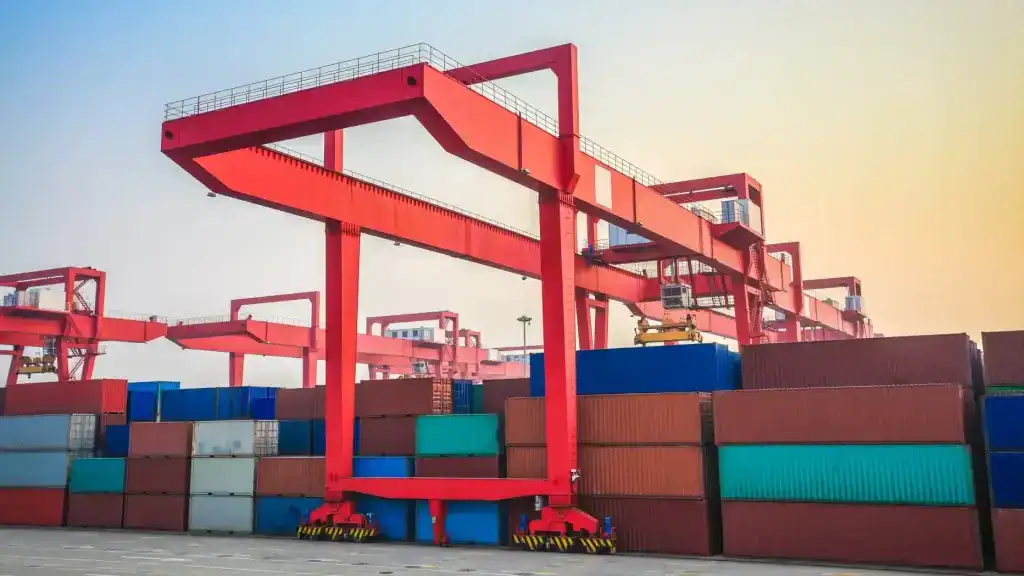
- 360° AI panoramic vision system eliminating RTGC blind spots around all - crane legs and travel paths
- Real-time AI detection of pedestrians, trucks, containers, and terminal vehicles in hazardous zonesIntelligent auto slowdown and safety alarm activation through RTGC PLC integration
- Multi-camera stitched bird’s-eye view with live operator monitoring and AI overlaysAI + radar fusion technology for reliable detection in fog, dust, rain, and night operations
- Rugged industrial IP67/IP69K system designed for harsh port and container terminal environments
Electrified gantry cranes must be kept a certain distance away from the bus bar in order to maintain the correct electrical contact or to prevent damages. Optical distance sensors are used to perform non-contact measurements near the bus bar. The DT35 distance sensor measures the distance between the bus bar and a point on the gantry crane.
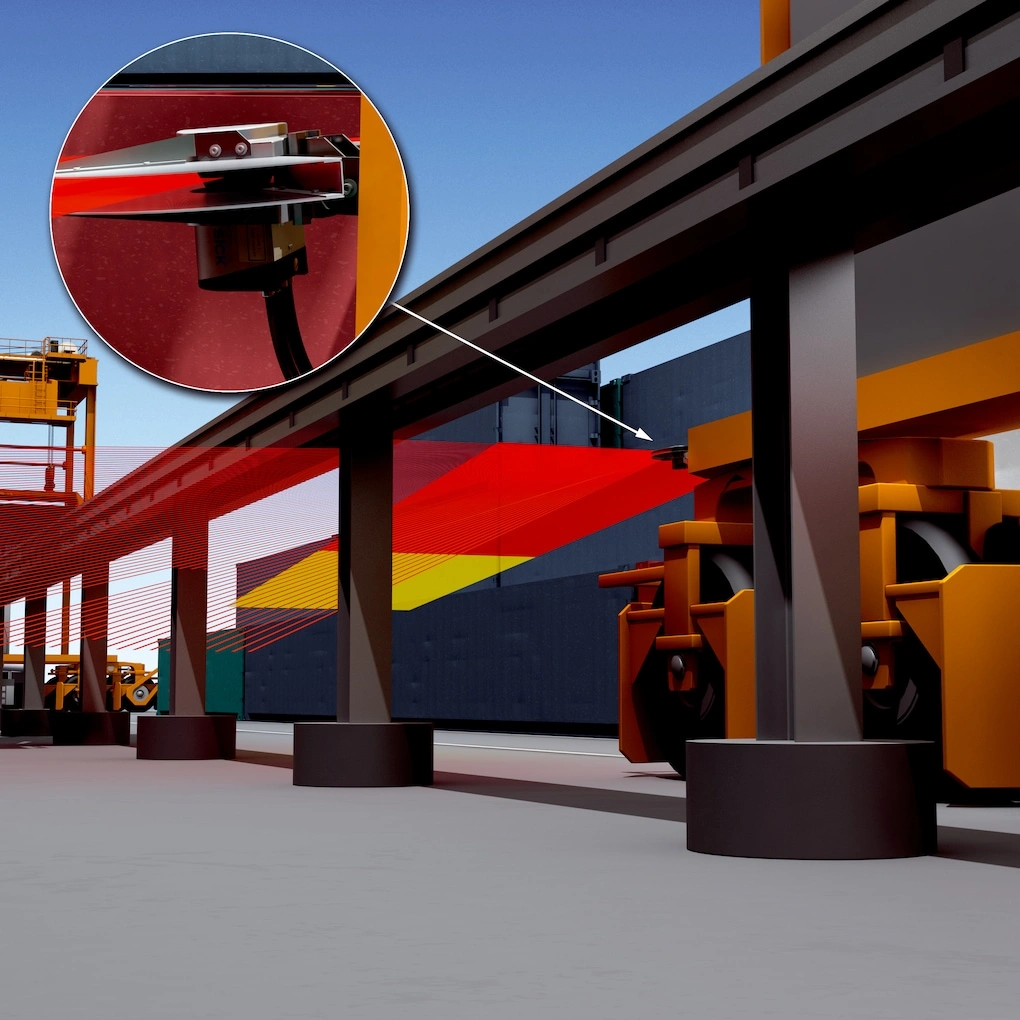
The 2D or 3D laser measurement system Lid GCP – Gantry Collision Prevention is a driver assistance system that supports crane operators in avoiding collisions with objects or subjects during crane travel, thus increasing safety and availability.
Our FMCW radar sensors provide reliable obstacle detection for collision avoidance of RTG port cranes. The X120RA-AF2 Sensor is an advanced radar technology with a narrow beam pattern, high sensitivity, and long range to help detect obstacles in the way of the RTG.
The sensor emits a well-defined beam of high-frequency radio waves from an internal antenna. Some of this emitted energy is reflected back to the receiving antenna. Signal processing electronics determine the distance from the sensor to the object based on the time delay of the return signal, allowing for reliable obstacle detection.
One or two ultrasonic sensors are mounted on the crane for each direction it travels. The number of sensors depends on how the size of the area to be monitored and whether you need to detect other vehicles or objects in addition to the cranes. The mounting orientation, synchronization of parallel devices, and use of different ultrasonic frequencies all prevent sensor cross-talk. Typically, ultrasonic sensors with two switching outputs are used. The first switches from normal to slow driving speed, and the second triggers the stop. 30LM sensors (6 m detection range) and the U260 series (10 m detection range) are ideal for this application.
We use cookies to improve your experience on this website. You may choose which types of cookies to allow and change your preferences at any time. Disabling cookies may impact your experience on this website. You can learn more by viewing our Cookie Policy.